Profit Taking and the Multibagger Illusion
Why a famous stock's lifetime return is the wrong benchmark for decisions inside a real portfolio.
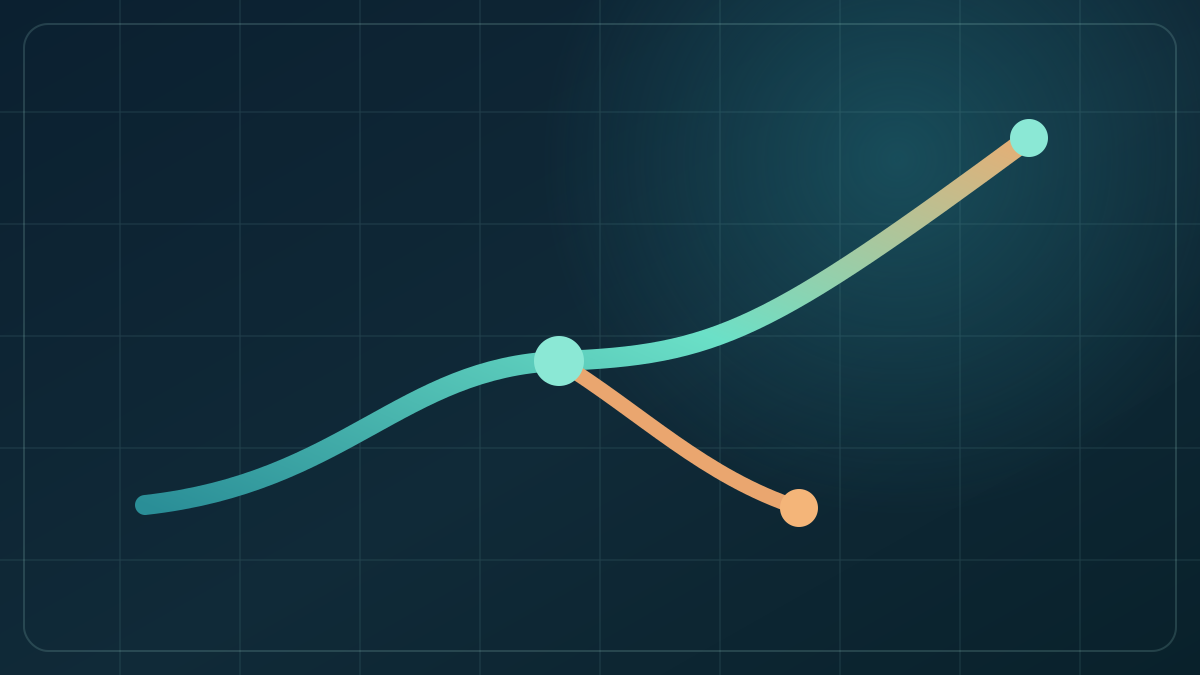
A stock that rose tenfold invites an impossible hindsight question: why did we not buy it at the bottom and hold every share? A more useful question is: what return did the position contribute to the whole portfolio, and what exit rule fitted the investor's needs?
Use the right denominator
If a stock is 5% of a portfolio and doubles, its direct contribution is roughly five percentage points before other moves, costs and taxes. The stock's 100% gain is not a 100% portfolio return. Hindsight comparisons also omit the uncertainty an investor faced before the winning path was visible.
Taking some profit after a meaningful gain can fund other goals and reduce the risk of giving back the entire gain. That can be sensible when concentration has grown or cash is needed. Yet selling every winner at a fixed percentage can also cut off long compounding runs.
Choose an exit rule that solves your problem
Set a maximum position weight, a valuation or thesis review point, and a rule for cash needs. If a holding breaches the weight limit, trimming it restores the portfolio's intended risk. If the thesis deteriorates, the case for exiting is stronger than a round-number gain. If neither changes, holding may be defensible.
A 30–40% gain or 35% annual return may serve as an illustration, but neither is a universal target or a reasonable default return assumption. Compounding at 35% for many years is mathematically dramatic precisely because sustaining it is difficult.
Measure the full strategy
Compare a trim-and-redeploy policy with a hold policy after taxes, turnover and missed upside. Include losing positions too. A rule that feels good when it crystallises a gain may underperform if it repeatedly sells the strongest businesses and reinvests into weaker ones.
Sources and notes
This article is general educational information, not personal financial advice or a recommendation to trade. Examples and chart patterns do not predict future returns. Investing and trading involve risk, including loss of capital.
Explore more Methodical Edge articles.
Browse Methodical Edge →