Options Moneyness, Intrinsic Value and Time Value
A clear framework for reading calls and puts without confusing in-the-money with profitable.
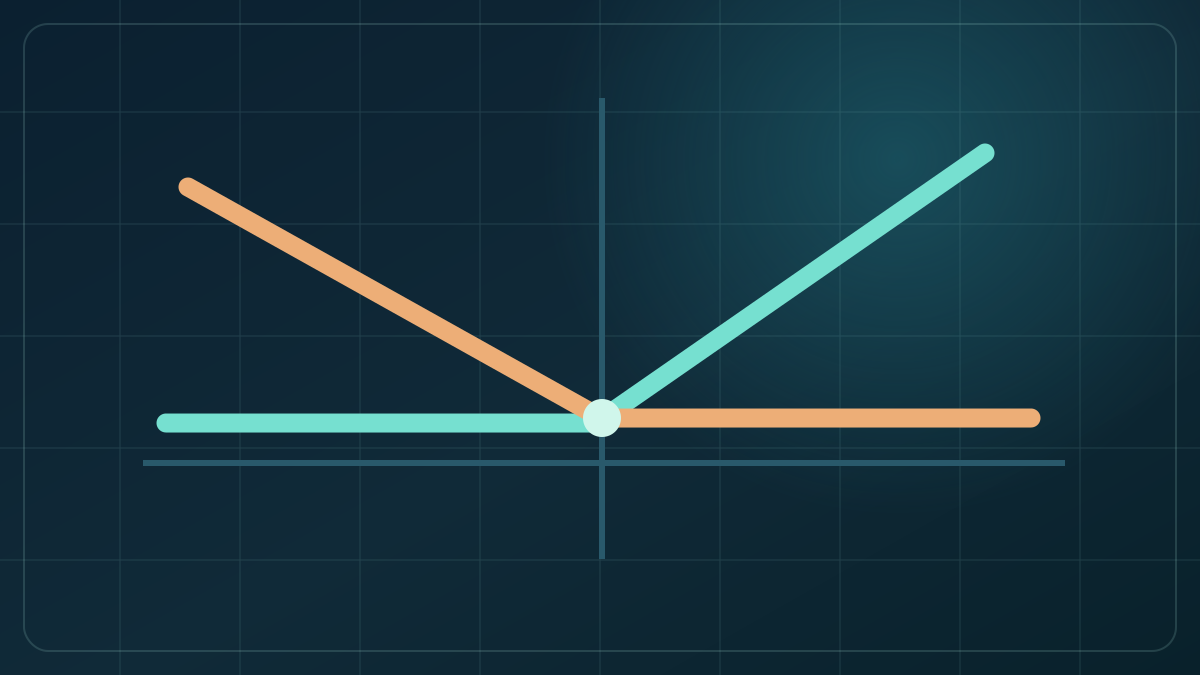
An option can be in the money and still lose money for its buyer. The distinction is simple: moneyness compares the underlying price with the strike; profit also depends on the premium paid or received.
The strike-price test
A call is in the money when the underlying price exceeds the strike; a put is in the money when the underlying price is below the strike. At the money means the two are approximately equal. Reverse the comparison for out-of-the-money contracts. These labels describe exercise value, not the investor's net result.
Suppose a call has a $200 strike and the share trades at $205. Its intrinsic value is $5. If the buyer paid an $8 premium, selling it for $5 at expiry still means a $3 loss per share before fees. Being in the money is not the same as having made a profit.
Premium has two parts
Intrinsic value is max(spot minus strike, zero) for a call and max(strike minus spot, zero) for a put. The amount of premium above intrinsic value is extrinsic, or time, value. Before expiry, time remaining and expected volatility can make an out-of-the-money option worth more than zero even though its intrinsic value is zero.
As expiry approaches, time value generally erodes, but price and volatility can still move sharply. At expiry, an out-of-the-money option has no intrinsic value; a long holder can lose the entire premium paid. An uncovered option seller can face much larger risks than that premium.
Ask three questions before a trade
Where is the underlying relative to the strike? What is the premium above intrinsic value? What price and timing are needed to overcome that premium and fees? Those three questions prevent a common mistake: describing an in-the-money contract as automatically profitable.
Sources and notes
This article is general educational information, not personal financial advice or a recommendation to trade. Examples and chart patterns do not predict future returns. Investing and trading involve risk, including loss of capital.
Explore more Methodical Edge articles.
Browse Methodical Edge →