The Cup-and-Handle Pattern Is a Checklist, Not a Signal
How to distinguish a plausible continuation setup from a shape that only resembles one.
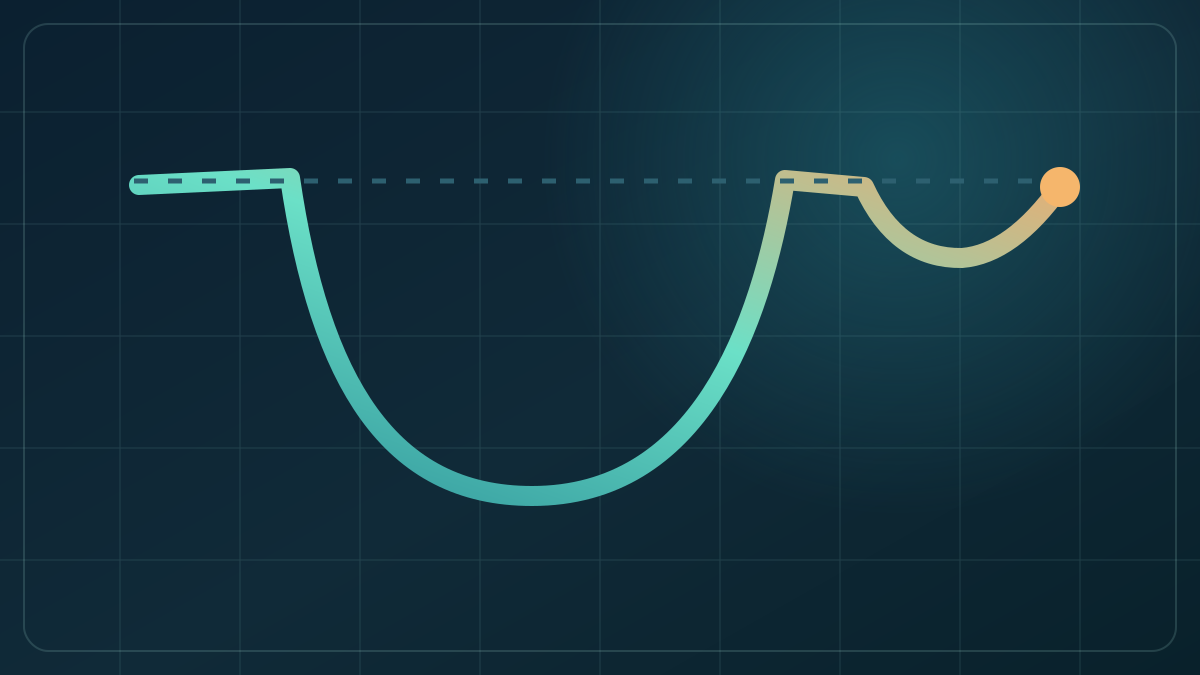
A cup and handle is often treated as a bullish continuation setup: an advance, a rounded consolidation, then a smaller pause near the former high. The pattern becomes useful only when its context, entry and exit are defined before the breakout.
Start with the trend
Look for a prior upward trend. The cup is a period of consolidation, ideally rounded rather than a one-day collapse and snapback. The handle is a smaller consolidation near the top of the cup; it can slope gently downward or move sideways. Forcing the label onto a falling stock changes the premise of the trade.
A broad cup and a handle in the upper half of the pattern are common screening criteria. Those are screening preferences, not guarantees. A shape drawn after the outcome is known is especially vulnerable to hindsight bias.
Write the trade plan first
Mark the handle's upper boundary before price crosses it. A close above that boundary is the proposed entry signal. Mark the handle's low as an invalidation level and calculate the amount at risk per share before deciding position size. A target based on a fraction of the cup's depth can be used as a planning convention, but it is not a forecast.
- Prior trend and cup shape: do they meet the rule you wrote before looking at the breakout?
- Entry: what closing price confirms the move?
- Exit: where is the setup invalidated, and is the potential reward adequate for that risk?
- Evidence: how did this exact rule perform across all examples, including failed patterns and costs?
The missing statistic
Claims that this pattern has a high success rate need a reproducible test. We therefore cannot assign it a universal win rate. Test the rules on a defined market and timeframe, include false breakouts, and record average win, average loss and trading costs. A pattern is only an edge if its full distribution supports it.
Sources and notes
This article is general educational information, not personal financial advice or a recommendation to trade. Examples and chart patterns do not predict future returns. Investing and trading involve risk, including loss of capital.
Explore more Methodical Edge articles.
Browse Methodical Edge →